+ 39 339 7379254 | divertisportasd@gmail.com

Protection of Minors in Sport: a responsibility of all adults

by ELISA MAGGI
Sports psychotherapist and psychologist

The field, the track, the sports center are life laboratories for young athletes, places where they experience joy, failures, labors and the relationship with authority. In this area, the protection of minors (Child Safeguarding) constitutes an ethical responsibility, legal and psychological that affects every adult involved.
Beyond physical safety: psychological well-being
Often, when we hear about protection, let's immediately think about preventing serious abuse. However, on the playing field we can easily realize that protection passes above all through the motivational climate. Protecting a minor means guaranteeing him the right to make mistakes. An environment that humiliates those who miss a penalty or that burdens a teenager with unrealistic expectations, it is exposing him to psychological risk. Protection is the maintenance of a healthy boundary between the expectations of the adult and the needs of the child.
Il Safeguarding Officer: a new sentry
One of the most significant innovations in the current sporting panorama is the mandatory introduction of the Safeguarding Officer (Responsible for abuse, violence and discrimination). This figure is not a “police officer", but a strategic point of reference for the sports club and parents: the one who is appropriately trained, helps maintain that healthy boundary. It has the double task of: prevent, that is, ensuring that safety protocols are respected, promoting a culture of inclusion and respect; e manage, therefore welcome any reports of inconvenience, guaranteeing confidentiality and activating the correct procedures to protect the minor. For parents and teachers, knowing who the Safeguarding Officer of your company is means having a reference not only for reporting, but also to consult on relational dynamics that seem to get out of control.
Name the risks: not just physical violence
Violence is a complex concept, the ways in which it manifests itself can be visible or insidious, sometimes difficult to perceive or recognize as such, both on the part of the individual who implements it, both on the part of those who suffer it. The impact of violent behavior on minors, in particular, it doesn't just depend on the form the behavior takes, but by a series of contextual and personal factors that can aggravate the consequences and influence present and future mental well-being (Change The Game, Against Abuse in Sport).
To protect young athletes, we therefore need to know from what we must protect them.
The current directives are clear and identify various forms of abuse that can pollute the sporting experience:
- Psychological violence: Perhaps the most insidious, and for this very reason it is very widespread. Made of verbal aggression – come fierce criticism, humiliations, he screams, threats, denigrations, isolation or punitive use of silence, but also of unrealistic expectations projected onto the child, verbal threats related to performance, lack of praise for efforts and commitment.
- Negligence: These are the cases in which yes they neglect basic needs (physical or emotional) of the young man, with inadequate medical care and supervision, unsafe conditions and unsuitable equipment.
- Abuse of power and harassment: Any behavior that exploits the adult's position of superiority for improper purposes, Also sexual.
- Discrimination: Gender related, to orientation, to religion and ethnicity.
- Physical violence: It manifests itself with shots, kicks, shocks, pushes, bites and any other method of causing physical harm (CPSU, 2021). It also includes every situation where the coach or his staff encourages the use of drugs or medications to elevate performance, or episodes in which athletes are forced to compete even if injured.
- Bullying: aggressive behavior, intentional and repeated over time, exercised by one or more people (bulli) on a victim perceived as vulnerable or weaker, aiming to isolate and belittle her.
Roles compared: Mister and Parents
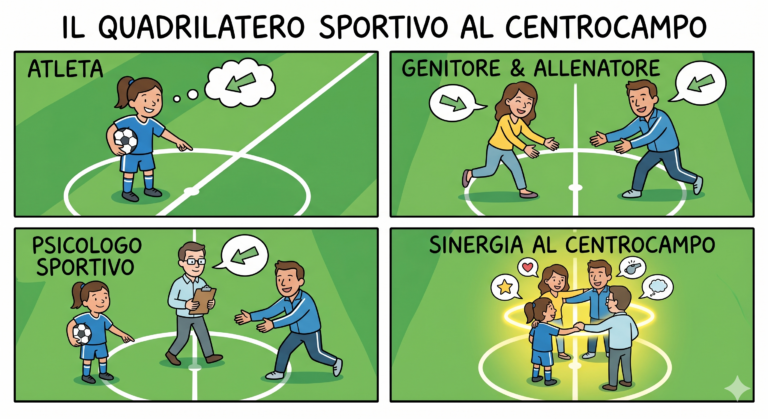
He Mister: He is a mentor and an educator. Protecting children and young people means using respectful language, create and maintain a peaceful climate, monitor the locker room and intercept signals of silent discomfort. The training required in the field of child protection in sport has now become a moral obligation. It is up to the coach to commit to respect and ensure respect – with the support of the relevant structure – codes of conduct and all procedures regarding the protection of minors.
The Parents: It is up to them to stay “off the grid”. Protection is expressed in letting sport remain a game. When sporting activity becomes a source of family stress or a demand with excessive and unrealistic expectations, the well-being of the young athlete collapses.
3 Signs not to be underestimated
As a psychotherapist, I often suggest that parents and coaches pay attention to these sudden changes:
- Social withdrawal or decline in performance: the boy who was previously enthusiastic begins to invent excuses for not training or appears unusually dull and isolated from the group.
- Sudden changes: mood swings and performance anxiety, or disproportionate emotional reactions to an error on the pitch or excessive irritability before matches.
- Increased psychosomatic symptoms: stomach ache, heachache, nausea that occurs more and more often before or during training sessions and matches.
Conclusions: Words can hurt more than a bad foul
Protecting minors is a collective responsibility. There can be no protection without an alliance between companies, technicians and families and is achieved through three fundamental aspects: the training, Nowadays knowing the material guidelines is essential; the communication, promptly report inappropriate behavior, in most cases it helps to ensure that the situation does not get worse; l’I listen, putting the voice of the children at the centre, they are often the ones who tell us what they need, if only we are willing to listen and observe.
Read more
- Department for Sport www.sport.governo.it
- FIGC-protection of minors
- Change the Game, Against Abuse in Sport